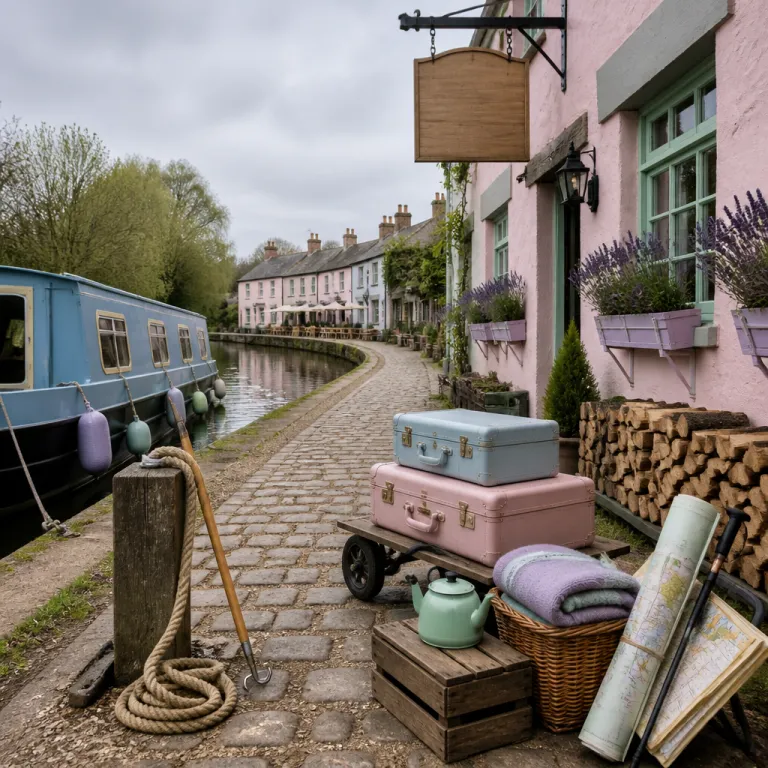
The canal towpath as a ready-made slow travel walking route
A canal towpath gives you a canal inn slow travel walking route that feels almost predesigned for couples. The flat line of the canal keeps the walk gentle while the old working heritage of the water and the former barge trade quietly shapes every rest stop and every inn along the way. When you follow this kind of trail, you move at the speed of the water rather than the speed of a car.
On a well maintained canal network, the distance between locks and villages naturally breaks your day into elegant stages. Eight to twelve kilometres of walking between one inn and the next feels like the right distance walking rhythm for most guests, and the canal itself becomes your map, your guide, and your quiet companion. You simply keep the water on one side, keep walking, and let the chimneys of the next hotel or inn rise slowly into view.
Unlike a mountain hiking trail, a canal route rarely demands hard climbs or technical gear. That makes this style of slow travel ideal for couples who want to talk, notice the changing light on the water, and arrive at a luxury hotel or characterful inn still fresh enough to enjoy the bar and dinner. The walking benefits are real for fitness and mood, yet the effort stays comfortably low, so you can repeat the same long distance pattern day after day.
From barge crews to canal inns: fireplaces, low ceilings, and real hospitality
Many of the most atmospheric canal inns began life as places serving barge crews and lock keepers rather than motorists. Step inside and you often find low ceilings, narrow bars, and a fireplace that still feels like the heart of the house, with the water only a few metres away outside. This is not the anonymous feel of a road hotel but a lived in inn where the landlord probably knows the weather and the distance to the next lock by heart.
Along historic french waterways in rural France, especially near the Canal du Midi and its side branches, you can still trace this working heritage in the layout of the buildings. One door faces the canal boat moorings while another opens towards the village, and the bar is placed so that both walkers and cruising guests can drift in without ceremony. When you are planning a canal inn slow travel walking route, look for properties that still keep this double orientation, because they tend to understand the needs of people who arrive on foot and wet.
For couples who like characterful stays, a small luxury hotel beside the canal can be the perfect compromise between comfort and history. You might spend one night in a simple inn with a wood stove and the next in a more polished property such as those featured in this guide to historic charm and hidden luxury in characterful villages. The constant is the canal itself, the gentle walking, and the sense that each fireplace you reach has been warming travelers for a very long time.
How far to walk each day: pacing four nights along the water
On a four night canal inn itinerary, the art lies in choosing the right daily distance along the water. Most couples find that a long distance of around ten to fifteen kilometres per day feels satisfying without turning the walk into an endurance test. The canal quietly measures this for you, with each lock, bridge, and village acting as a natural marker of time and effort.
Think of your canal inn slow travel walking route as a chain of short stages rather than one long push. You might start from a small town with a railway station, walk a comfortable distance to a waterside inn, then continue the next day to a slightly grander luxury hotel that still faces the canal and the old towpath. By the third and fourth day, your body has settled into the rhythm, and the walking benefits become obvious in how easily you sleep and how sharply you notice the landscape.
Some couples like to mix walking with a foot bike rental or a short section by canal boat, especially on stretches of the Canal du Midi where cycling paths run beside the towpath. Others prefer to stay entirely on foot, using guide books and local maps rather than a phone to keep the experience pleasantly analog. For inspiration on how to blend water views, inn stays, and measured distance, the itineraries in this elegant guide to bay side inn stays show how to pace days so that arrival always feels like a reward rather than a collapse.
Planning a canal-based inn to inn journey in France and beyond
Designing a canal inn slow travel walking route begins with choosing the right waterway and season. In France, the Canal du Midi, the Canal de Bourgogne, and the quieter lateral canals of the Loire offer year round walking options, with towpaths that stay mostly flat and villages spaced at comfortable intervals. Elsewhere in the European waterways system, converted towpaths in the Netherlands, Belgium, and parts of the United Kingdom give similar access to a dense canal network of inns and small hotels.
When you are planning, think in terms of four linked nights rather than a single long holiday block. Night one might be in a modest inn near a railway hub, night two in a former hotel barge mooring house, night three in a small luxury barge themed property, and night four in a slightly larger luxury hotel in a market town. The key is to keep each day’s walking distance realistic, to identify reliable rest stops for lunch or coffee, and to ensure that every inn you book actually faces the canal rather than a busy road behind it.
Many travelers draw inspiration from long distance pilgrimage routes such as the Chemin de Saint James towards Santiago de Compostela, where the logic of walking from inn to inn is deeply embedded. A canal based journey borrows that same spirit of slow travel but replaces mountain passes with level towpaths and barge cruise traffic gliding past at a relaxed pace. For more on how common rooms and fireplaces shape this style of hospitality, the article on inns where the common room still works offers a useful lens for choosing places that match the mood of your route.
What to pack for a canal towpath walk from inn to inn
Packing for a canal inn slow travel walking route is very different from preparing for a high mountain hike. The towpath is usually level, the surface is often firm, and you are never far from water, villages, and rest stops where you can pause for coffee or a glass of wine. That means you can travel light, which is one of the quiet luxuries of this kind of journey.
A small daypack is usually enough for each day’s walk, especially if your main luggage is transferred between inns by taxi or by the innkeepers themselves. Good walking shoes, a light waterproof layer, and clothes that work both on the trail and at dinner in a hotel dining room will serve you better than heavy technical gear. Many couples carry a compact guide to the local canal network, a slim notebook for impressions, and perhaps one or two carefully chosen books that match the region, whether that is a history of the Canal du Midi or a memoir of barge life on European waterways.
Digital tools can support the planning without overwhelming the experience. Some travelers keep a private Pinterest RSS board of canal side inns they like, while others follow inn focused accounts on Twitter or YouTube to see how properties look across the seasons. However you research, the aim is the same ; to arrive at each fireplace with just enough luggage, just enough distance in your legs, and just enough time before dinner to sit by the water and feel that you have earned the next glass.
FAQ
How many kilometres should we plan to walk each day on a canal route ?
Most couples find that walking between ten and fifteen kilometres per day along a canal feels comfortable. This distance allows time for long lunches, unhurried rest stops, and slow travel without turning the day into a forced march. On flatter sections of towpath, you can extend the distance slightly if you are used to regular hiking.
Is a canal inn to inn walk suitable for first time long distance walkers ?
Yes, a canal based itinerary is one of the most forgiving forms of long distance walking. The terrain is usually flat, navigation is simple because you follow the water, and you are rarely far from villages or transport links. This makes it an excellent first step before tackling more demanding routes such as sections of the Chemin de Saint James towards Santiago de Compostela.
Can we combine canal walking with a barge cruise or canal boat stay ?
Many regions with a strong canal network, especially in France, allow you to mix walking days with short sections on a hotel barge or a privately rented canal boat. Some luxury barge operators welcome guests who walk between locks and rejoin the vessel later in the day. This hybrid approach keeps you close to the water while varying the pace and style of each stage.
What is the best season for a four night canal inn itinerary ?
Canal towpaths in temperate regions are often walkable year round, but spring and autumn usually offer the most pleasant balance of temperature and light. Summer brings longer days and lively cruising traffic on the waterways, while winter can feel atmospheric if your inns have good fireplaces and hearty food. When planning, check local conditions for any towpath closures or water management works.
How do we find characterful inns rather than generic roadside hotels ?
Look for properties that face directly onto the canal, mention barge or lock keeper history in their descriptions, and show images of common rooms with fireplaces rather than only bedrooms. Specialist guides to inn stays, regional tourism offices, and word of mouth recommendations from walkers can all help you filter options. When in doubt, contact the inn and ask how far their front door is from the water and whether most guests arrive on foot, by bike, or by car.