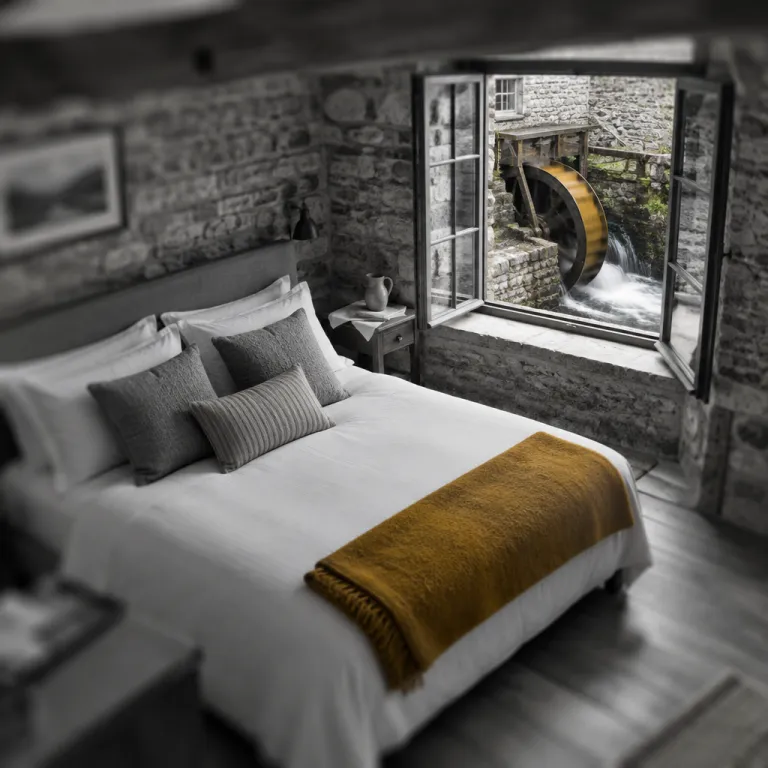
What a working mill leaves behind for the overnight guest
A serious river mill was engineered around force, not comfort. Yet that original watermill layout now shapes a remarkably calming stay in a converted century watermill, giving you thick stone walls, deep window seats overlooking the river, and a constant sense of shelter. The best converted properties lean into this history rather than hiding it, turning the old wheel, sluice, and mill race into quiet focal points instead of theme-park props.
Walk through a beautifully converted mill and you feel the logic of the building. The main bedrooms often occupy former grain lofts, while the ground floor bar or lounge sits where the mill machinery once turned, overlooking the water that powered everything. In places like Castleford Mill in Yorkshire or Dunster Working Watermill in Somerset, you can still trace how grain moved through the structure. When a designer respects that history, each place to sit or sleep feels earned by the structure, not imposed by a generic riverside hotel template.
Look for details that signal care rather than kitsch. A low casement that opens window shutters toward the river, a stair that still doglegs around an old shaft, or stone floors left bare so you sense the natural beauty of the site underfoot. In property reviews, guests often mention how the sound of water and the weight of the walls make the area feel like a refuge, especially for solo travelers who want a converted watermill inn that encourages them to slow down and feel rooted in the place and surrounding nature.
The sound of the race: lullaby or nuisance for your stay
Every stay in a converted century watermill lives or dies by how it handles sound. The river that once powered the mill still runs, and the race can be a soft roar or a sharp rush depending on the season, recent rainfall, and the exact position of your bedrooms. For some guests that moving water is a lullaby, while for others it raises a reviews question before they even search property options.
Good owners treat acoustics as seriously as linen thread counts. They map which bedrooms sit closest to the race, which overlook a quieter leat, and which view cottages across the water instead of the main fall, then they describe those differences clearly in room notes and property reviews. As a rough guide, a fast mill stream can reach 50–60 dB at an open window, similar to steady traffic, while calmer stretches of river can drop below 40 dB at night. When you read reviews, pay attention to how often guests mention the sound of water after dark, and whether they call it soothing, intrusive, or simply worth checking with the inn in advance.
If you are noise sensitive, build a quick activity agenda around your own preferences. Use a detailed powered search filter on a trusted inn platform, then follow up with direct questions about the exact location of your room in the century watermill. Ask which floor you will be on, whether the windows face the race or a garden, and how far the room sits from any terrace. A responsive host will give answers powered by floor plans or simple distance estimates rather than vague reassurances, and that honesty is usually reflected in better reviews and fewer late-night complaints about the river.
For history-minded travelers interested in mill sites near a national park, it is worth checking activity guides to inn stays close to historic landscapes before you commit. Those roundups often highlight which converted properties manage the balance between authentic water sound and real rest. They also help you frame the right reviews question to ask before you book, especially if you are planning a longer solo stay and want quiet evenings as well as daytime outdoor activities.
Riverside life: gardens, walks, and the damp stone charm
A watermill inn stay is always a waterside stay first. The river dictates the line of the garden, the position of the terrace, and the way the property opens window shutters to catch morning light over the water. That proximity to water also brings a particular damp stone smell that some guests find deeply grounding, especially when paired with the low murmur of the race and the sight of moss on old walls.
For solo travelers, this riverside setting quietly fills the day without demanding a packed activity agenda. You can step outside in under five min and be on a towpath, a woodland trail, or a small bridge overlooking the mill pool, which makes it easy to build gentle outdoor activities into your stay without ever getting into a car. In regions where the inn sits near a national park, such as the Lake District or the edge of the Smokies, the combination of riverside paths and wider protected nature gives you a rare mix of intimacy and scale.
Many converted century watermill properties now lean into low key water sports and fishing rather than heavy machinery. You might find kayaks stacked by the bank, a short casting lesson offered at dawn, or simple benches placed to frame the most beautiful bend in the river. When you read property reviews, look for mentions of outdoor seating, wildlife sightings such as herons or otters, and how the inn uses its natural beauty instead of fighting it with overbuilt decks or bright lighting that drowns out the night sky.
Expansion is a particular test of character for any converted mill. If extra bedrooms or view cottages have been added, check whether they sit lightly in the landscape or crowd the original stone shell, and compare your impressions with honest analyses of when expansion preserves character. A watermill inn that grows carefully usually keeps the river as the quiet center of gravity. One that sprawls risks turning a singular place into just another waterside complex with little sense of history or connection to nature.
Preservation trade offs and how they shape your room
Historic protection is both a gift and a constraint for any watermill conversion inn stay. A listed converted century watermill often cannot move windows, widen doorways, or punch in new openings without serious negotiation, which means your bedrooms inherit the proportions of grain stores and engine rooms. That is why you sometimes find a lavish bed in a compact place, or a generous sitting area tucked under a surprisingly low beam that reflects the building’s industrial past.
Owners who respect the building work with these limits rather than smoothing them away. They might keep the original mill wheel visible behind glass in a lounge, or leave the old hoist door as a fixed panel overlooking the river, while threading modern comforts like underfloor heating and strong showers through existing chases. In some beautifully converted properties, you will see interpretive plaques explaining which century each part of the mill dates from, turning a simple corridor into a short history walk. When a property is thoughtfully adapted, you feel both the weight of history and the ease of contemporary hospitality in the same room.
Before you book, spend time on more than just the hero images. Use a clear search tool on your preferred platform to filter for room size, then read the fine print and property reviews to see how each bedroom actually functions. Look for phrases that explain ceiling height, stair steepness, and bathroom layout, and treat vague language as a prompt for a direct reviews question to the innkeeper. Ask for approximate room dimensions, whether beams cross the bed area, and if any steps separate the bedroom from the bathroom.
For a deeper sense of how character buildings behave when adapted, it is worth reading long form pieces on stays that do not fit standard hotel genres. Those case studies help you calibrate your expectations before you step into a converted century mill. They also underline why a watermill inn that feels slightly odd on paper can feel perfectly right once you are inside, listening to the water under the floor and watching light move across old stone.
How to read a watermill listing like an insider
Choosing the right watermill conversion inn stay starts long before you arrive. The way a property describes its relationship with the river, the machinery, and the surrounding nature tells you whether it respects the building or simply trades on its age. A thoughtful listing reads almost like a guided walk through the mill, while a careless one hides behind generic luxury adjectives and vague claims about a beautiful area.
Begin with the map and the wider area. Is the inn on the edge of a national park, or in a small village where the mill once powered local industry, and does the description explain how you can reach walking trails or other outdoor activities in a few min on foot? If the listing barely mentions the river, the race, or the history of the mill, that is usually worth checking with a direct message before you commit, especially if you care about landscape and local stories.
Next, interrogate the photos and captions. Do they show the wheel, sluice, or race in context, or only as a decorative backdrop for cocktails, and do the bedrooms feel shaped by the old structure or oddly interchangeable with any other property? When you search property options on a site that offers good filters, use those tools to narrow down to genuine conversions, then read the narrative sections slowly. Look for specific references to the century the watermill was built, how many bedrooms sit in the main building versus view cottages, and which spaces overlook the river or gardens.
Finally, treat reviews as a conversation rather than a score. Scan for detailed property reviews that mention specific rooms, the exact sound of the water, and how the inn team handled any question neighborhood guests raised about late night arrivals, and ignore one line rants that lack context. When a platform offers answers powered by hosts or even instant answers through a simple chat box, use those channels to ask about things like pet friendly policies, access to water sports, and whether windows really open toward the river or just onto a car park. The way a host responds to these questions often tells you as much about the place as the photos do.
FAQ
What makes a watermill conversion inn stay different from a standard riverside hotel ?
A watermill conversion inn stay is built inside a former working mill, so the layout, wall thickness, and window positions are inherited from the building’s industrial past. You usually sleep in bedrooms that once stored grain or housed machinery, with the river and race still running just outside. That gives a stronger sense of place and history than a purpose built hotel that only imitates waterside character.
How noisy is the river at night in a converted century watermill ?
Noise levels vary widely between properties and even between rooms in the same inn. Bedrooms closest to the race or weir will hear a constant rush of water, while rooms overlooking calmer stretches of river can be much quieter. As a rule of thumb, ask whether windows are double glazed and how far your room is from the main fall. Always read recent reviews and ask the inn directly which rooms are best if you are sensitive to sound.
Are watermill inns usually pet friendly and good for outdoor activities ?
Many watermill inns are pet friendly because they sit in rural locations with easy access to paths and fields. Their riverside setting naturally supports outdoor activities such as walking, birdwatching, and sometimes gentle water sports like kayaking or paddleboarding. Check each property’s pet policy, any restrictions related to nearby farmland or protected nature, and whether dogs are allowed in all bedrooms or only in specific areas before you book.
How can I tell if a mill has been beautifully converted rather than over modernized ?
A beautifully converted mill keeps visible traces of its history, such as the wheel, beams, and stonework, while still offering modern comfort. Listings that explain how the original structure shaped the bedrooms and shared spaces are usually more trustworthy than those that only show generic decor. Detailed property reviews that mention both charm and practicality, including heating, water pressure, and storage space, are another strong indicator.
Is staying in a historic mill near a national park practical for a solo traveler ?
For solo travelers, a mill near a national park can be very practical because it offers built in walks, views, and quiet corners for reading without needing constant excursions. Many such inns provide simple activity suggestions, from short riverside strolls to day hikes in the wider area, and some can arrange guided walks or local transport. Just confirm transport options, dining hours, and late check in procedures so you are not reliant on a car or rigid schedules.