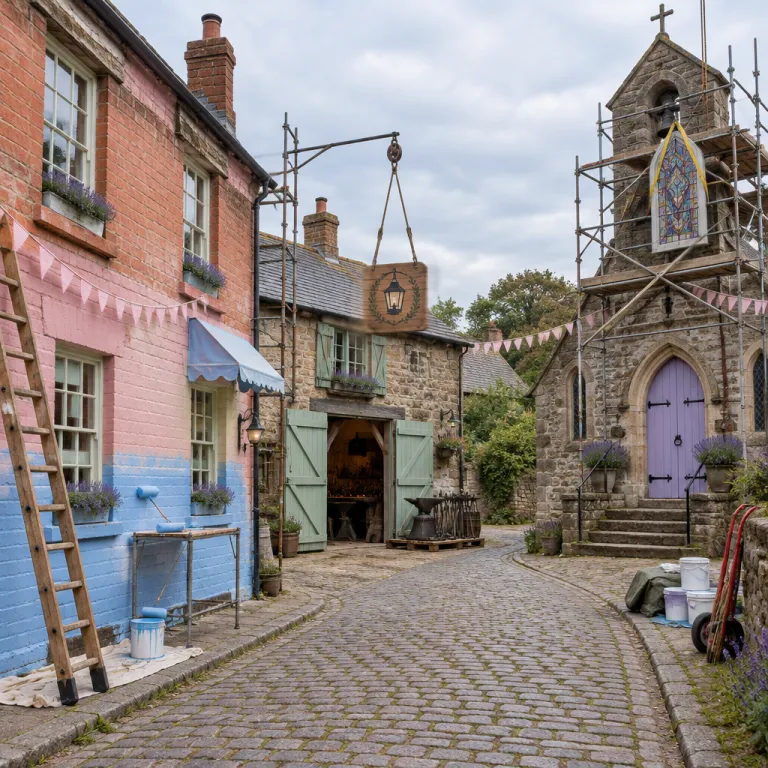
Why historic school, forge, and chapel inns feel different from classic conversions
Most travelers know the romance of a coaching inn on a country street, but a historic schoolhouse, forge, or chapel turned into an inn offers a sharper kind of intimacy. When a former school building, a working smithy, or a neighborhood church is adapted for anything except worship or lessons, every guest room is a decision rather than a default, and every corridor carries the memory of another life. You feel that tension the moment you step inside a school house lobby or under a chapel nave ceiling, because the original purpose still shapes how you move through the space.
Traditional hotel-to-inn conversions start with a structure already tuned to hospitality, while a school located on the edge of a town or a church on a tight city plot must be reimagined from the ground up. A building converted from a primary school or a high school rarely has the neat stack of identical room school layouts that a former hotel would, so architects lean into asymmetry, split levels, and unexpected volumes. That is why couples who care about character often prefer these historic places to new buildings, even when the latter offer larger spas or more predictable amenities.
There is also an ethical layer that matters to many guests who book through a luxury and premium inn platform. Choosing a carefully restored schoolhouse inn, forge conversion, or chapel hotel supports historic preservation in a very practical way, because the revenue from rooms keeps fragile buildings in use for a long time instead of letting them decay after a school closed or a church congregation moved north to a newer district. In the United States, for example, the National Park Service notes that adaptive reuse can be one of the most effective tools for preserving properties listed on the National Register of Historic Places, and travelers wary of wasteful real estate churn often see a stay in a school building or former church as a quiet vote for reuse over demolition.
The schoolhouse inn: from classroom echoes to candlelit common rooms
Step into a well handled school house conversion and you immediately read the bones of the old public school, even if the blackboards have gone. High ceilings, tall windows, and the generous proportions of a former room school create luminous lounges where couples linger over wine instead of arithmetic, and the ghost of the classroom lives on in the way sound carries. The best innkeepers let that history breathe, keeping original cloakroom hooks or a wood frame staircase so you sense the children who once rushed through this building.
Many of these properties sit in quiet school districts just off the main street, where a primary school or high school once anchored the neighborhood and then the school closed as families moved away. When a school building becomes an inn, the long corridor that once linked several school buildings might now connect a series of suites, each one carved from what used to be a frame school classroom or a head teacher’s office. You may find a library bar in the old staff room, or a breakfast space in the former assembly hall, with original floors carefully restored as part of a thoughtful historic preservation plan inspired by widely used standards such as the Secretary of the Interior’s Standards for Rehabilitation in the U.S. or Historic England’s guidance on adapting listed school buildings.
For couples, the appeal lies in how these historic places balance nostalgia with comfort, especially when the conversion respects the national register guidelines even if the property is not formally listed on the register historic rolls. A historic schoolhouse inn in New England, for example, might follow U.S. National Register of Historic Places standards, while a converted village school in the Cotswolds works with a local conservation officer under the National Heritage List for England. Real-world examples range from the Old School Hotel in Port Isaac, Cornwall, housed in an 1870s school, to the Schoolhouse Hotel in White Sulphur Springs, West Virginia, which occupies a former 1912 high school; when you book a stay in such a school located in a small town or a leafy city area, you are not just reserving a room, you are stepping into a story that began long before your arrival and will continue after you leave.
The forge and the workshop: industrial heat turned into hearthside hospitality
Former forges, blacksmiths’ shops, and small industrial buildings rarely appear on a national register, yet they can become some of the most atmospheric inns in a historic town. The chimney that once vented smoke from the furnace now anchors a lounge fire, and the tools that once lined the walls become sculptural décor that reminds you this was a working building for a long time. When a building converted from a forge keeps its rough stone, wood frame trusses, and uneven floors, the result feels more like staying in a living workshop than in a polished hotel.
These properties often sit on the edge of a city or at the north end of a village street, where real estate once favored industry over housing, and where churches and schools clustered nearby to serve workers. A restored forge inn might share a courtyard with a former schoolhouse hotel or a chapel guesthouse, creating a small constellation of salvaged stays that turn an entire area into an open air archive of local labor. Travelers drawn to heritage-rich mountain towns such as Cherokee, North Carolina, or former mining settlements in Colorado will recognize the same appeal here; the landscape of work, worship, and learning becomes the landscape of rest.
From a guest’s perspective, the key question is whether the heat of the original building survives the arrival of air conditioning and double glazing. Sensitive owners keep the main forge space as a generous common room, where the high roof and exposed beams frame a bar rather than a furnace, and where the sound of conversation replaces the ring of metal. One owner of a nineteenth century forge based inn in a former mining town describes the goal as “keeping the marks of the hammer, but softening the edges with light and linen,” a balance that shows how industrial buildings can join churches and school buildings as unexpected yet deeply satisfying places to stay.
The chapel and the church: sleeping under vaulted ceilings
Converting a church or chapel into an inn raises questions that go beyond design, especially when the original congregation was catholic and the building still feels sacred. The ceiling is the great asset, with soaring vaults or timber trusses that no contemporary hotel could afford to replicate, yet the acoustics can be unforgiving when you introduce soft furnishings and late night conversation. Guests who choose a former chapel inn or church conversion often do so precisely because they want to feel that tension between reverence and relaxation.
Many of these churches stand on prominent street corners in the oldest part of a city, or at the heart of a small town where several churches once served different denominations before some congregations closed or merged. When such churches become inns, the nave might hold a restaurant, the side aisles might host a sequence of suites, and the former sacristy might become a spa room, all while stained glass windows cast colored light across the floors. Some properties pursue formal recognition on the national register of historic places or an equivalent local register historic listing, while others follow best practice informally, preserving altars, pew ends, or carved stone as part of a wider historic preservation effort; examples include the Chapel 5 Suites in Naxxar, Malta, created from a 17th century chapel, and the Church Street Hotel in London, which incorporates features from a former parish complex.
Travelers sometimes worry whether staying in a former church will feel respectful, especially if they are not catholic or if they come from a tradition where churches remain strictly sacred. The most successful conversions address this by telling the building’s story clearly, explaining how the congregation chose to sell or lease the property and how the inn now funds its upkeep for the long time ahead. In that sense, a chapel based inn sits in the same ethical space as a school building or forge conversion; the building lives on through hospitality rather than through abandonment or insensitive redevelopment.
How to choose and book a historic school, forge, or chapel inn
When you search a luxury and premium booking website for an inn in a historic area, filter first by building type rather than by star rating if you want a true adaptive reuse experience. Look for clear descriptions that state whether the property began life as a school house, a church, or an industrial building, and whether the owners have engaged with national register or local historic places frameworks. A serious inn will explain how the building was built, when the school closed or the church congregation moved, and what elements of the original structure remain.
Pay attention to floor plans and room descriptions, because a former room school or frame school will rarely yield identical suites, and a chapel conversion might have mezzanines or unusual staircases. If accessibility matters, check whether the wood frame structure allowed for lifts or ramps, especially in narrow city plots where historic preservation rules limit alterations to the street façade. For couples seeking romance, look for language about original beams, vaulted ceilings, or repurposed school buildings, and be wary when a property uses heritage as a marketing flourish without naming the actual school built or church that once stood there.
Location still matters as much as history, so weigh whether you prefer a quiet town edge where a school located near fields now offers dark skies, or a central city street where churches and school districts cluster around cafés and galleries. Booking platforms increasingly allow you to filter for historic buildings, adaptive reuse hotels, or former schools and churches, and the best inn stay guides to refined stays near a desert’s cultural heart or a coastal heritage district show how a thoughtful listing can balance narrative with practical details, from room sizes to walkable distances. When you find that balance in a school building, forge, or chapel inn, you gain both a memorable stay and a deeper understanding of how real estate, education, worship, and hospitality have braided together over the past century.
What these salvaged stays teach about inn making and memory
Staying in a former school, forge, or chapel changes how you think about what an inn can be, because the building was never meant to host overnight guests. A sensitive conversion shows that the art of inn making lies less in decoration and more in how you let the old and new argue gracefully, whether that means keeping a school building corridor intact or leaving a church pulpit in place as a sculptural focal point. Over time, guests become part of that layered story, adding their own anniversaries and quiet weekends to a timeline that once held exams, sermons, or the clang of metal.
For many couples, the emotional charge of these buildings matters as much as the thread count, especially when they choose properties that treat historic preservation as a responsibility rather than a branding exercise. You can feel the difference in how staff talk about the school districts that once fed pupils into the primary school, or how they reference the churches that still operate nearby, positioning their inn as one member of a living community rather than as an isolated monument. That sense of continuity is what turns a simple night away into a stay that lingers in memory long after you have left the city or town behind.
As adaptive reuse continues to shape the hotel landscape, the most compelling examples will likely come from these unexpected sources rather than from grand palaces alone. A modest wood frame school house on a quiet street, a compact forge at the north edge of a village, or a small catholic chapel in a dense urban area can each become a place where past and present share the same roof. When you next scroll through options on a premium inn platform, pause on the listings that mention a school closed, a building converted, or a church reborn as an inn; those are often the stays nobody expected to love, yet they are the ones guests talk about for a very long time.
FAQ about staying in historic school, forge, and chapel inns
Are historic schoolhouse and chapel inns comfortable enough for a luxury stay?
Most historic school building and chapel conversions that position themselves as luxury or premium inns invest heavily in insulation, climate control, and high quality bedding. The key is to check whether the building converted has modern plumbing, soundproofing, and heating or cooling that respects the historic fabric. Reviews from recent guests usually reveal whether comfort matches the promise of character.
How can I tell if a historic inn respects preservation standards?
Look for references to local historic preservation bodies, the national register of historic places, or a regional register historic listing in the property description. Serious owners explain which original elements of the school buildings, churches, or industrial structures they retained and how they adapted them. Transparency about materials, architects, and conservation choices is a strong indicator of integrity.
Is it respectful to stay in a former church or catholic chapel?
In most cases, the congregation or church authority has formally deconsecrated the building and chosen to lease or sell it for reuse, often to secure its upkeep for the long time ahead. Many chapel inns share this story openly, explaining how hospitality now funds maintenance that a small congregation could no longer afford. If you feel unsure, choose properties that communicate clearly about this transition and show ongoing respect for the building’s origins.
Do historic schoolhouse inns suit guests who need accessibility features?
Accessibility varies widely, because older school buildings and wood frame structures were not designed with lifts or step free access in mind. Some conversions add ramps, elevators, and adapted rooms, while others remain challenging for guests with mobility needs due to strict preservation rules. Always contact the inn directly to confirm details about entrances, bathrooms, and circulation before booking.
Are these historic conversions usually more sustainable than new hotels?
Adaptive reuse of existing buildings often has a lower environmental impact than constructing a new hotel, because it preserves embodied carbon and reduces demolition waste. When a school closed or a forge shut down, reusing the structure as an inn can extend its life by decades while avoiding new construction on greenfield sites. Sustainability still depends on energy systems and operations, but starting with an existing building is generally a strong first step.