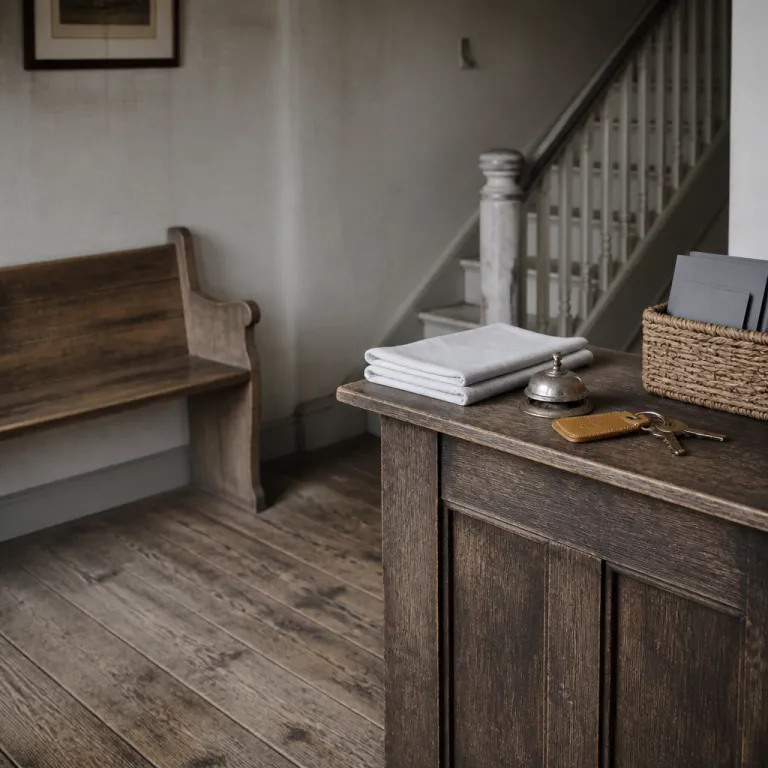
Why former parsonages make such compelling inn hotels
A parsonage-turned-inn begins with a very particular kind of house. Built for clergy rather than commerce, the typical rectory sits slightly back from the village street, with a modest façade and a surprisingly generous garden stretching ten or fifteen metres behind. That quiet distance from traffic, combined with a domestic scale, already feels closer to a country inn than to most urban hotels.
Inside, the original plan usually offers a series of reception rooms on the ground floor, a broad stair, and a cluster of bedrooms above that now translate beautifully into guest accommodation. Those former parlours become guest rooms with a sitting room atmosphere, where a pair of armchairs and a small table with chairs can replace the minister’s desk without disturbing the historic proportions. Because these buildings were designed for gathering and pastoral care, the social flow from entrance hall to drawing room to dining room feels instinctively right for a relaxed stay.
Unlike mills or factories, a parsonage rarely carries an industrial past, so the conversion does not have to fight against hard edges or cavernous volumes. Instead, you inherit human scale, timber floors that creak softly underfoot, and window bays that lend themselves to a breakfast table or a reading nook. For couples used to anonymous chain hotels, that sense of lived history is often the decisive factor when they check availability on a premium booking website. The result is an inn that can offer the amenities of a small hotel while preserving the emotional warmth of a family house.
The St. Michaels parsonage: from clergy house to Chesapeake inn
One of the clearest case studies for a parsonage-based inn sits on North Talbot Street in St. Michaels, Maryland. The main house was constructed in 1879 as a substantial family residence for Henry Clay Dodson, a local merchant, and later passed to Dr. Joseph Seth before the Union United Methodist Church acquired it as a parsonage for its clergy, according to Talbot County land records and church histories. When the Workman family stepped in to convert it into a bed and breakfast with eight guest rooms, they were not inventing character; they were carefully translating an existing social architecture into hospitality.
The ground floor already offered a sequence of rooms ideal for guest use, so the former family parlour became a shared sitting room and the dining room evolved into the heart of the bed breakfast service. Original timber on each room floor was restored rather than replaced, which means you still hear that soft, reassuring creak as you cross from staircase to guest rooms. Outside, the garden that once served as a contemplative space for the clergy now frames a private patio for some rooms, giving couples a sheltered corner for a late glass of wine. One recent guest described it in a review as “like staying in a friend’s historic home, but with better linens and a quieter street.”
Practicalities were addressed with equal care, from discreet off street parking for several cars to modern shower installations that respect the historic shell. The inn’s position places restaurants and shops within easy walking distance, so guests can stroll to the Chesapeake Bay Maritime Museum and then return to a house that still reads as part of the town’s fabric. For readers interested in a broader survey of similar heritage properties, the guide to premium historic inns near you offers useful context on how such conversions perform in the luxury segment. In St. Michaels, the parsonage’s story is legible in every cornice and corridor, yet the experience is firmly that of a polished inn rather than a museum.
Architecture that welcomes: rooms, floors and the quiet luxury of scale
Architecturally, the clergy-house inn stands apart from other adaptive reuse projects because it begins with a plan already tuned to domestic comfort. Reception rooms on the ground floor were designed to host parishioners, so their proportions naturally suit a small number of guest suites rather than a dense grid of hotel corridors. That means fewer guest rooms overall, but each one tends to feel more like a chamber in a country house than a unit in a commercial hotel.
On a typical first floor, you might find a generous room with a queen bed, a second room with twin beds, and perhaps a smaller chamber that now works as a compact room twin for friends travelling together. The original fireplaces, deep window sills and timber room floor boards give these spaces a tactile richness that new build hotels struggle to emulate. In some conversions, one former study becomes a snug sitting room with a writing desk and table with chairs, while another evolves into a small library where guests can read in the late afternoon light.
Bathrooms are where the most sensitive interventions occur, especially when adding a modern shower or even a discreet hot tub to a historic shell. The best projects avoid overloading the structure, instead inserting slimline fixtures and routing services through existing voids so that cornices and skirting boards remain intact. A good example of this careful threading can be seen in other period properties such as the Victorian house profiled in the Amherst inn feature, where every alteration respects the original envelope. In parsonage conversions, that same restraint allows the building’s ecclesiastical past to remain visible without tipping into theme-park piety.
From rectory table to restaurant service: how parsonage inns host and feed
The social life of a parsonage-based inn often centres on the former dining room, where the clergy once hosted parish suppers and committee meetings. That room, with its long table and generous windows, now becomes the stage for a refined bed breakfast service, often featuring local produce and recipes tied to the region. Because the space was always meant for shared meals, it adapts naturally to restaurant style service without feeling like a grafted on amenity.
Some properties extend this hospitality into a small in house restaurant open to non residents, especially when the inn sits at a convenient distance from the village centre. In such cases, the main dining room may host a handful of tables for couples, while a smaller side room becomes a semi private space with its own table and chairs for intimate celebrations. Where zoning or demand does not support a full restaurant, owners often curate partnerships with nearby restaurants and shops, guiding guests toward the best local tables while keeping the inn itself focused on breakfast and afternoon tea.
Adaptive reuse specialists note that “adaptive reuse of historic buildings”, “growth in heritage tourism”, and “increased demand for boutique accommodations” are converging trends that make these projects commercially viable, as reflected in reports from organisations such as the National Trust for Historic Preservation. In practice, that means a parsonage inn can sustain a high level of service with a relatively small number of guest rooms, provided the food and beverage offer feels thoughtful rather than perfunctory. For travellers comparing options on a booking platform, the promise of a candlelit dining room in a former rectory often outweighs the lure of a larger but more anonymous hotel restaurant.
Practicalities, pets and the new language of reviews
Romance aside, a parsonage-based inn must still perform on the practical front, from parking to Wi Fi, if it wants to compete with contemporary hotels. Many former clergy houses sit on plots deep enough to accommodate discreet guest parking at the rear, preserving the historic façade while solving a key concern for self driving couples. Where space is tighter, owners sometimes negotiate shared parking arrangements with nearby churches or civic buildings, turning a potential weakness into a neighbourly collaboration.
Guest expectations around pet policies, accessibility and in room comfort have also evolved, and the most successful parsonage inns respond with a quietly modern approach. A growing number now offer clearly signposted pet friendly rooms on the ground floor, often with direct access to a private patio or garden so that a dog can be walked without disturbing other guests. Inside, details such as a powerful shower, good sound insulation between floors, and a choice between queen and twin configurations in different rooms signal that this is a serious hotel level operation housed within a historic shell.
Reputation is shaped as much by digital perception as by the physical stay, and here the story of the St. Michaels property is instructive. Prospective guests routinely check Google reviews before they check availability, weighing comments about friendly staff, quiet inn rooms and generous breakfasts against any concerns about creaky floors or limited hot tub access. As one official FAQ from the property puts it, “What amenities does the Parsonage Inn offer? Gracious hospitality, delicious breakfasts, free bicycles, and off-street parking.” That combination of tangible perks and intangible warmth is exactly what modern travellers seek when they choose an inn over a larger hotel.
How parsonage inns compare with other historic conversions
Set against mills, barns or former schools, the parsonage-based inn occupies a distinct niche in the landscape of adaptive reuse. Industrial buildings often impress with volume and exposed structure, but they can struggle to deliver the intimate scale that couples expect from an inn, especially when guest rooms line long corridors. Barn conversions, meanwhile, tend to cluster activity in a single vast space, which can make it harder to carve out the quiet corners that define a truly restful stay.
By contrast, the parsonage begins with a hierarchy of rooms that already separates public and private zones, making it easier to create guest rooms that feel secluded while keeping social spaces close to the entrance. The former study might become a snug sitting room for reading, while the drawing room hosts afternoon tea and the dining room anchors the bed breakfast ritual. Because these houses usually sit within walking distance of the village church and main street, guests enjoy both seclusion and easy access to restaurants and shops without needing to drive after dinner.
From an operational perspective, the limited number of guest rooms in a parsonage inn encourages a service style that is more attentive than performative. Owners often greet guests personally at check in, share local walking routes, and remember preferences over the course of a stay in a way that would be impossible in larger hotels. For travellers who value that level of recognition, curated guides such as the review of why the Best Western Ambassador Inn and Suites stands out can help frame expectations across different property types. The parsonage inn will not suit those seeking a resort scale pool deck, but for couples who care more about a well chosen book by the fire than a sprawling spa, it remains one of the most satisfying forms of historic accommodation.
FAQ
What is a parsonage and why does it convert well into an inn ?
A parsonage is a residence provided by a church for its clergy, usually located close to the church and village centre. Its layout of reception rooms on the ground floor and bedrooms above maps neatly onto the needs of a small inn, with ready made spaces for guest rooms, a sitting room and a dining area. The combination of domestic scale, garden access and central position makes it unusually well suited to conversion into a characterful inn style hotel.
Why convert a parsonage into a hospitality property instead of another use ?
When clergy numbers fall or parsonages become underused, conversion into an inn or bed and breakfast allows the building to remain occupied and maintained. Hospitality use preserves the house as a social hub, welcoming travellers instead of parishioners while supporting local restaurants and shops. This approach also contributes to heritage tourism, bringing economic value to the community without erasing the building’s historic identity.
What should I look for when booking a stay in a former parsonage ?
When you research a parsonage inn, read recent reviews to understand how well the owners balance historic character with modern comfort. Check whether there is convenient parking, clear information about pet friendly policies, and details on room types such as queen or twin configurations. It is also worth confirming whether your room has a private patio, which floor it is on, and whether the bathroom offers a modern shower or any special features like a hot tub.
How do parsonage inns differ from other historic hotels or guest houses ?
Parsonage inns tend to be smaller than many historic hotels, with fewer guest rooms and a more personal style of hosting. The architecture usually feels like a generous family house rather than a grand civic building, which creates a softer, more intimate atmosphere. Because these properties were designed for pastoral care, guests often report a sense of being looked after that goes beyond standard hotel service.
Are parsonage conversion inns suitable for guests with pets or mobility needs ?
Suitability varies by property, so it is essential to check availability of specific room types and facilities before you book. Some parsonage inns offer ground floor pet friendly rooms with direct garden access, while others may not accept animals at all due to the historic fabric. For mobility needs, look for clear information about stairs, room floor levels and bathroom layouts, and contact the inn directly if you require step free access or adapted showers.