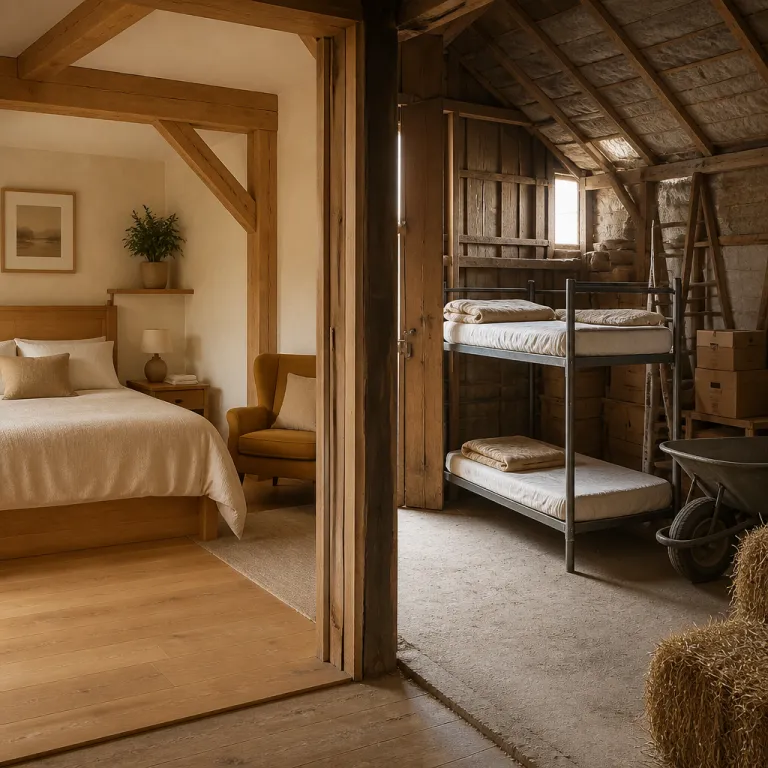
Reading a barn conversion inn rural hotel before you book
Walk into a successful barn conversion inn rural hotel and you feel the volume first. The original barn still reads as one generous agricultural space, even if your bedroom and the kitchen are tucked into carefully carved areas that respect the old structure. A weaker barn conversion inn rural hotel feels like a standard hotel corridor with exposed beams screwed on as décor.
Architects, builders, surveyors and owners now treat every barn as a potential inn, because adaptive reuse promises character, sustainability and a faster conversion than a new build. Yet agricultural buildings were designed for storage, not habitation, so ceiling heights, window placement, insulation and acoustic privacy all need serious change before a single night is comfortable. When you check any barn conversion inn rural hotel online, look for photos that show the whole barn volume, not just a cropped room with a fashionable chair.
Start with the basics and check availability across several hotels in the same rural region, then compare how each property explains its conversion story. A credible inn will mention the planning phase, the structural assessment and the construction phase, rather than only listing amenities and spa offers. If the site only repeats generic hotel language about a cosy stay and stylish rooms, you may be looking at storage with beds rather than a true barn conversion.
What separates a great rural inn from storage with beds
The best barn conversion inns keep the agricultural scale, so you still sense the threshing floor in the dining room and the hayloft in the upper bedroom suites. Poorly handled conversion projects slice the barn into narrow hotel rooms, killing the proportions until the building feels like any anonymous cottage style motel. When you arrive, check whether public areas such as the bar and lounge occupy the heart of the barn or hide in leftover corners.
Look closely at natural light, because original barns often had few openings and successful hotels solve this with discreet glazing, roof lights and carefully placed windows. When you read guest reviews, note any repeated complaints about dark spaces, cold draughts or noise between each room, since these signal that insulation and acoustic work were compromised during the conversion. The dataset used by many professionals is blunt about the challenge ; “Structural issues, insulation problems, and planning permissions.”
Planning constraints in the United Kingdom and other rural areas can actually help, because listed building rules often force architects to think harder about how to retain the barn while still creating a comfortable stay. Owners who respect these constraints usually work with specialist architectural firms, construction companies and surveying agencies, rather than chasing the cheapest builders. For a sense of how thoughtful reuse feels in practice, compare your chosen inn with an urban industrial conversion such as the glass factory project Shore Haven by Lark Hotels, or with value focused properties like the carefully reviewed Lambert Inn in Whittier, presented as a smart city stay for design conscious guests.
Rooms, amenities and the reality of a barn stay
Inside a strong barn conversion, each bedroom should feel tailored to the structure, not forced into a grid. Sloping ceilings, original trusses and deep window reveals can create memorable hotel rooms, but only if the layout allows enough circulation space and natural light for a relaxed stay. When you check room descriptions, look for clear dimensions in metres and honest photos of both single rooms and larger suites.
Pay attention to amenities that respond to rural realities rather than urban habits, such as generous boot rooms, drying areas for wet gear and flexible dining times for walkers arriving late at night. A well planned kitchen will often be semi open to the dining room, echoing the barn’s original volume while still meeting modern food safety standards. Families should check whether extra beds for children fit comfortably within the room or whether they turn a characterful space into a cramped storage zone.
Luxury does not always mean marble and chandeliers in these hotels ; it often means excellent mattresses, serious sound insulation and heating systems that make thick stone walls feel warm in winter. Before you book, check times for check in and late supper, because rural locations in the United Kingdom and beyond may not offer many alternatives once the inn closes. For urban travellers used to central city options such as the well located Kings Inn in Seattle, described as a central base for value focused guests, this shift in rhythm can be part of the charm if you prepare.
How to read a booking site for barn conversions
On a serious booking site for inns, the strongest barn conversion properties are not hidden ; they are curated with clear photography, floor plans and transparent descriptions of the conversion process. When you check availability, do not just scan prices and cancellation policies, but also study how the inn explains its history, its rural setting and the specific change from working barn to guest house. A property that treats the barn as a marketing label rather than a structural reality will usually gloss over these details.
Use filters to compare several barn conversion options in the same rural areas, then read long form reviews rather than only star ratings, because narrative comments reveal how the building actually works over time. Guests will tell you whether the kitchen smells drift into the bedroom at night, whether children sleep well in the extra beds and whether the public areas feel convivial or cramped. Pay attention to repeated praise for staff who understand both the building and the landscape, since this often signals owners who were deeply involved in the planning phase and completion.
When a site highlights “salvaged stays” or adaptive reuse, look for concrete information about structural assessment, sustainable materials and energy efficiency, not just mood words. Many successful projects report an average conversion cost in the hundreds of thousands of dollars and a project duration close to twelve months, which reflects the complexity of turning a barn into a safe hotel. If a listing claims a rapid change with minimal work, you should mentally flag potential shortcuts in insulation, fire safety or acoustic separation.
Hidden gem barns and when to walk away
Some of the most rewarding nights you will spend in the countryside happen in modest looking barns that have been converted with quiet intelligence rather than glossy theatrics. These hidden gem inns often sit at the end of single track lanes, with only a few rooms, a small kitchen and owners who live on site and know every field and footpath. They may not appear at the top of hotel search results, but careful reading of reviews will reveal patterns of loyalty and repeat stays.
To find them, research local regulations and planning histories in the United Kingdom or your chosen region, because barns that went through rigorous permissions often emerge as better designed properties. Surveyors and architects involved in these conversions usually prioritise structural safety, thermal performance and acoustic privacy, which translate directly into a more comfortable stay for you and your children. When you check times for arrivals, note whether the inn offers flexibility for late trains or flights, since that small extra gesture often signals a guest focused mindset.
There are also moments to walk away, even when the photos look seductive and the price per night seems fair. If the barn conversion inn rural hotel cannot show clear fire exits, if rooms appear windowless or if public areas feel like leftover corridors, you are looking at storage with beds, not a true inn. In those cases, redirect your search through curated platforms that specialise in characterful properties, such as the ocean facing stays highlighted on inn stay guides like the Atlantic oceanfront inn collection, and apply the same critical eye to every rural barn you consider.
FAQ
How long does a typical barn conversion project take before opening as an inn ?
Most barn conversion projects that become inns take around twelve to eighteen months from planning phase to completion, because structural assessment, insulation upgrades and interior fit out all require careful sequencing. When you read about a barn conversion inn rural hotel that claims a very short timeline, ask how they handled soundproofing, fire safety and thermal performance. A realistic duration usually signals that architects, builders and surveyors were given enough time to do their work properly.
Why are insulation and soundproofing so critical in barn conversion hotels ?
Original barns were designed for storing crops and animals, not for keeping people warm or quiet at night, so their walls and roofs often leak heat and sound. High quality barn conversion hotels invest heavily in insulation, airtightness and acoustic separation between each bedroom and the public areas. When you read guest reviews, consistent comments about warmth and quiet usually indicate that these invisible upgrades were done well.
Do barn conversion inns always need planning permission ?
In most regions, including much of the United Kingdom, changing a barn from agricultural use to a hotel or inn requires formal planning permission and sometimes listed building consent. Authorities want to protect rural character, ensure structural safety and manage traffic in sensitive areas. Responsible owners work with architects and surveyors early, which often leads to more imaginative layouts and better amenities for guests.
What should families with children check before booking a barn conversion stay ?
Families should check availability of larger rooms or interconnecting suites, and confirm whether extra beds for children fit comfortably without blocking exits. It is also wise to ask about stair gates, outdoor safety around ponds or farm equipment and flexible meal times for younger guests. Reading detailed reviews from other families will help you judge whether the inn’s rural setting and converted spaces suit your own routines.
How can I tell if a barn conversion inn is genuinely sustainable ?
A genuinely sustainable barn conversion inn will explain its use of existing structures, sustainable materials, energy efficient heating and sometimes on site renewables, rather than only mentioning recycling bins. Look for information about improved insulation, high performance glazing and careful water management, which all reduce the environmental impact of your stay. When owners share this level of detail, it usually reflects a broader commitment to thoughtful hospitality rather than surface level green marketing.