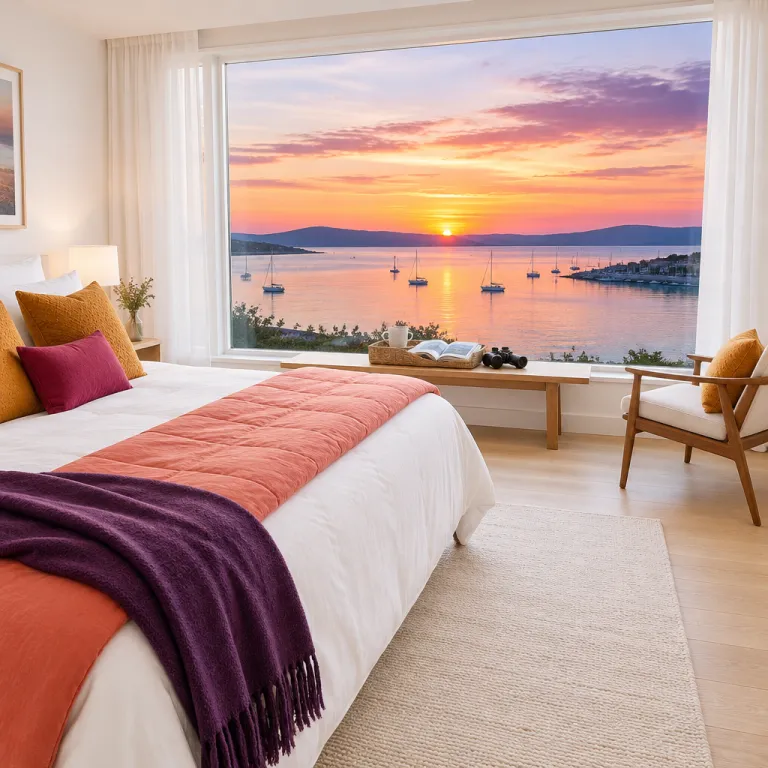
Reading the bed and the window: what orientation really tells you
In a memorable inn room, the bed faces the window rather than the television. That single choice of room design quietly signals whether the property values the landscape, the weather and the changing light, or whether it defaults to a wall mounted screen as the main attraction. When you study guest room photos before you book, notice whether the bed is aligned with the view or turned away from it toward an oversized black rectangle.
Look first at how the room interior uses its available space, because the most thoughtful interiors place the bed so that a guest wakes to sky, trees or city roofs instead of a channel guide. A well planned hotel bedroom will often float the bed slightly forward on the floor, with a low custom headboard that does not block the window and with room elements like a slim writing desk or reading chair tucked to the side. This creates a room feel that is calm and expansive, even when the room itself is compact.
Pay attention to the relationship between bed, window and overhead light, since harsh ceiling fixtures can flatten even the most beautiful view. When mood lighting is layered with bedside lamps and a soft wall sconce near the window, guests feel invited to sit and watch the weather rather than scroll. In the best hotel room layouts, the television is demoted to a discreet corner while the route from bedroom to bathroom door flows naturally without blocking the outlook.
Couples who travel regularly will tell you that the most romantic hotel room is rarely the one with the biggest screen. Instead, they remember the bedroom where they could sit up in bed and watch snow fall over a courtyard, or see fishing boats turn toward the harbor at dawn. When you check hotel photos online, zoom in on the window wall and ask yourself whether the room design expects you to look out or look down.
This is where the main SEO phrase inn room design view bed becomes a practical tool rather than a clumsy search term. Use it as a mental checklist for every room you consider, asking how the bed, the view and the overall interior design work together. If the images show beds pushed under low windows, curtains permanently half drawn or a mirror where the view should be, the guest experience will probably feel more like a generic hotel than a characterful inn.
Orientation also shapes how you move through the space as a guest, from the first step across the threshold to the last glance outside before sleep. A room that opens directly toward a window, with the bed framing that outlook, makes arrival feel like a small ceremony rather than a shuffle past luggage and closet doors. When hotel guests enter and immediately see a glowing screen instead, the message is clear: the outside world is background, not the main event.
Why older inns get room orientation right more often than hotels
Historic inns usually sit in irregular buildings where no two rooms share the same shape, and that architectural awkwardness often leads to better room interior choices. Thick stone walls, sloping ceilings and deep window seats make it impossible to bolt a television directly opposite every bed, so innkeepers must think harder about how the bed, the window and the rest of the space relate. In many of the most characterful properties, the way the bed frames the view feels almost inevitable, as if the building itself insisted on it.
In contrast, a modern hotel room in a chain property is often drawn on a grid, with identical rectangles repeated along a corridor. That regularity encourages a standardised interior design formula where the bed faces the same wall mounted screen in every bedroom, regardless of whether the window looks toward a river or a car park. When you compare photos, you will notice that great inns use their quirks to frame views, while many hotels simply drop furniture into a template.
Older buildings also tend to have taller windows set lower to the floor, which makes it easier to sit or lie in bed and still see out. When an inn keeps the bed slightly offset, with a small custom bench or pair of beds angled toward the glass, guests love the sense of being cradled by the room while still connected to the landscape. That kind of room feel is hard to achieve in a narrow hotel bedroom where the window is squeezed between the bed and the closet.
Storage works differently too, because closet storage in an inn is often carved out of alcoves rather than delivered as a bulky wardrobe box. When the closet door is tucked away from the window wall, the sightline from bed to view stays clean and uninterrupted. You can check hotel images for this detail; if a full height closet blocks the only window, the guest experience will feel compromised before you even unpack.
Bathrooms in older inns frequently sit off to one side, creating a gentle dogleg from bed to bathroom door that preserves privacy without stealing the best light. A well judged bed bathroom sequence might place a small bathroom vanity under a secondary window, leaving the main view to the bedroom and its seating. This is where thoughtful room design trends differ sharply from generic hotel layouts, which often sacrifice the bedroom view to give the bathroom a dramatic but impractical glass wall.
For couples balancing romance with budget, these spatial decisions matter as much as thread count or minibar brands. Guides to refined yet budget conscious inn stays often highlight how a cleverly oriented room can feel luxurious even when the finishes are simple, because the view does most of the work. When you read a review or a curated list of masters of inn stays reimagined for refined yet budget conscious travelers, pay close attention to how often the writer mentions waking up to a view rather than watching late night television.
Light, mood and the quiet power of a window first room
Light is the second language of any successful inn room, and it speaks most clearly when the bed faces the window. Natural lighting shapes how the room elements read throughout the day, from the grain of the floorboards to the texture of the linens at the foot of the bed. When the relationship between sleeping area and view is handled well, the first thing you see on waking is a soft wash of daylight rather than the standby glow of a screen.
Artificial lighting then steps in to support, not compete with, that natural rhythm. A thoughtful interior design scheme layers an overhead light with bedside lamps, a floor lamp near a reading chair and perhaps a subtle strip of mood lighting along a window seat or headboard. This allows guests to tune the room feel from bright and practical while unpacking to low and intimate when they return from dinner.
In many older inns, the bathroom is a small but crucial part of this choreography. A bathroom vanity lit by warm sconces rather than a single harsh ceiling fitting makes early starts gentler and late nights kinder on tired eyes. When the bathroom door opens away from the main window, the glow from within does not fight the natural light but adds a secondary layer that hotel guests often appreciate more than they expect.
Mirrors deserve special attention, because a well placed mirror can double a view and transform a modest room into something quietly beautiful. If the mirror reflects the window from the angle of the bed, you effectively gain a second outlook without adding any physical space. When you check hotel galleries, look for this trick; it is a hallmark of inns where the team today clearly understands how to stretch every square metre.
Public areas tell their own lighting story, and the hotel lobby is usually the most revealing. In a true inn, the lobby or entrance hall often feels like an extension of the best rooms, with pools of warm light, low ceilings and perhaps a fire already lit before you arrive. Articles on how an inn’s light tells its story often note that properties which reject cold hotel fluorescence in shared spaces are the same ones that get bedroom lighting right.
Couples tend to remember the way a room made them feel at specific moments; the first coffee in bed with pale light on the duvet, or the last glass of wine by a window that has turned into a dark mirror. When mood lighting supports those rituals rather than flattening them, the guest experience lingers long after the stay. That is why the best view led bedroom layouts treat light as a central character, not an afterthought.
Furniture, storage and the view led room that couples remember
Once the bed and window have been aligned, everything else in the room should follow that decision. A view led room design usually includes a comfortable chair or small sofa angled toward the glass, a compact writing table that does not steal the best spot and a discreet place to set a tray or bottle. When the relationship between bed and outlook is respected, furniture feels like a supporting cast rather than a set of obstacles.
Storage is where many otherwise promising rooms go wrong, especially when a large closet is dropped directly beside the window. In a better planned hotel bedroom, closet storage is pulled back toward the entrance, leaving the window wall free for seating or a low bench at the foot of the bed. This keeps the room interior open and allows guests to move easily between bed, window and bathroom without weaving around doors.
Details around the bed bathroom connection also shape how luxurious a stay feels. A sliding bathroom door with good sound insulation can preserve both privacy and space, while a swing door that blocks the view every time it opens can make even a large room feel clumsy. When the bathroom vanity is tucked into a niche rather than dominating the bedroom, the overall design feels calmer and more considered.
Couples rarely reminisce about the minibar tower or the exact brand of the overhead light fitting. They remember the beautiful curve of a headboard that framed the view, the way the floor felt under bare feet on a cold morning and the ease of reaching for a robe from a nearby closet without breaking the spell. These small room elements add up to a guest experience that feels tailored rather than generic.
Custom beds can make a significant difference, especially in older inns where standard sizes do not fit neatly between walls or under beams. A slightly narrower but longer bed, built to suit the space, can allow a clearer sightline to the window and a better flow around the room. When beds are treated as part of the architecture rather than plug in units, guests love the sense that the room was made for them rather than for a spreadsheet.
Before you book, study the photographs with a critical eye and imagine your own routines in that space. Picture where you would place a suitcase, how you would reach the bathroom at night and whether you could sit together by the window without moving furniture. If the answers feel easy and the alignment between bed and view looks natural, there is a good chance the stay itself will feel just as effortless.
How to read room photos, resist oversold views and choose well
Online galleries are your best ally when you want a room organised around the view, not the television. Start with the wide shots of each hotel room and look for the bed first, then trace an imaginary line from the pillows to whatever sits opposite. If that line ends at a window with real scenery beyond, the view focused layout is probably central to the property’s philosophy.
Next, study the window itself and how it is dressed. Heavy curtains permanently pulled to the side, a chair wedged into the sill or a desk blocking access all suggest that the view is more marketing asset than lived experience. A window that is easy to reach, with a seat or bench that invites lingering, usually signals that guests are meant to use the space rather than just photograph it.
Be wary of rooms where the view is oversold in a single dramatic image while the rest of the photos feel oddly cropped. If you never see the bed in relation to the window, there is a chance the two do not work well together in real life. In those cases, a simpler room with a smaller window but a real fire, good lighting and thoughtful interiors can offer a far richer guest experience than a picture window onto a car park.
Look for honest signs of wear on the floor, the arm of a chair or the edge of a window seat. These marks often indicate that guests actually sit, read and talk in those spots, rather than perching on the bed to watch television. When guests love a particular corner of a room, you will often see it repeated across different user photos, which can be more revealing than any staged professional shot.
Do not forget the wider property either, because outdoor space can extend the sense of view far beyond the bedroom. An inn with a thoughtful garden or terrace often applies the same care to its interiors, aligning beds with windows and arranging furniture to frame vistas. Guides that explore why outdoor space separates the good from the merely decent can help you read between the lines of marketing language and focus on what really matters.
Finally, remember that the most successful stays balance aesthetics with practicality. A room where the bed faces the window, the bathroom door swings clear, the closet is accessible and the lighting can be tuned to your mood will always feel more luxurious than a flashier but less coherent space. When you check hotel options for your next trip, let the orientation of the bed be your quiet but reliable compass.
FAQ
Why does it matter if the bed faces the window instead of the television ?
The way a bed is oriented shapes how you experience the room from the moment you wake. When the bed faces the window, you connect first with natural light, weather and view rather than a screen, which usually feels more restorative and romantic. This simple choice often reflects a wider commitment to thoughtful room design and a more considered guest experience.
How can I tell from photos whether a room is really view focused ?
Look for images that show the bed, the window and the rest of the space in a single frame. If you can clearly see that you would be able to sit or lie in bed and look out without twisting, the room is likely organised around the view. Be cautious when galleries show only close ups of the window or the scenery without revealing how the furniture is arranged.
Are older inns always better than modern hotels for view oriented rooms ?
Not always, but older inns often have architectural quirks that encourage more imaginative layouts. Thick walls, deep window seats and irregular shapes can make it easier to place the bed in a way that frames the view. Some modern hotels do this well too, yet many follow a standard template that prioritises a television wall over the window.
What room features should couples prioritise for a romantic stay ?
Couples usually value a comfortable bed with a good view, flexible lighting and a seating area where they can share a drink or read together. A well placed bathroom door, practical closet storage and a calm overall room feel matter more than flashy gadgets. When these elements work together, even a modest room can feel quietly luxurious.
Is a spectacular view worth paying extra for if the room layout is poor ?
A spectacular view can be undermined by a layout that forces you to crane your neck from the bed or navigate around awkward furniture. In many cases, a slightly less dramatic view in a well organised room will feel more comfortable and intimate over the course of a stay. It is usually wiser to pay for coherence and comfort than for a view that only works in photographs.
Sources
Potentially useful references for further reading include: American Hotel & Lodging Association, Condé Nast Traveler and Architectural Digest, which regularly feature case studies of hotel room layouts, lighting strategies and guest experience design.